Do you know what capsule houses are and who might want to buy one? The modular, space-efficient designs of capsule houses make them a revolutionary way to live in a small area. They maximize functionality while using as little room as possible. These new housing solutions are perfect for urban developers, hospitality companies, emergency housing projects, and forward-thinking people who want cheap, eco-friendly alternatives to traditional building methods because they combine smart design with long-lasting materials.
Understanding Capsule Houses: The Future of Compact Living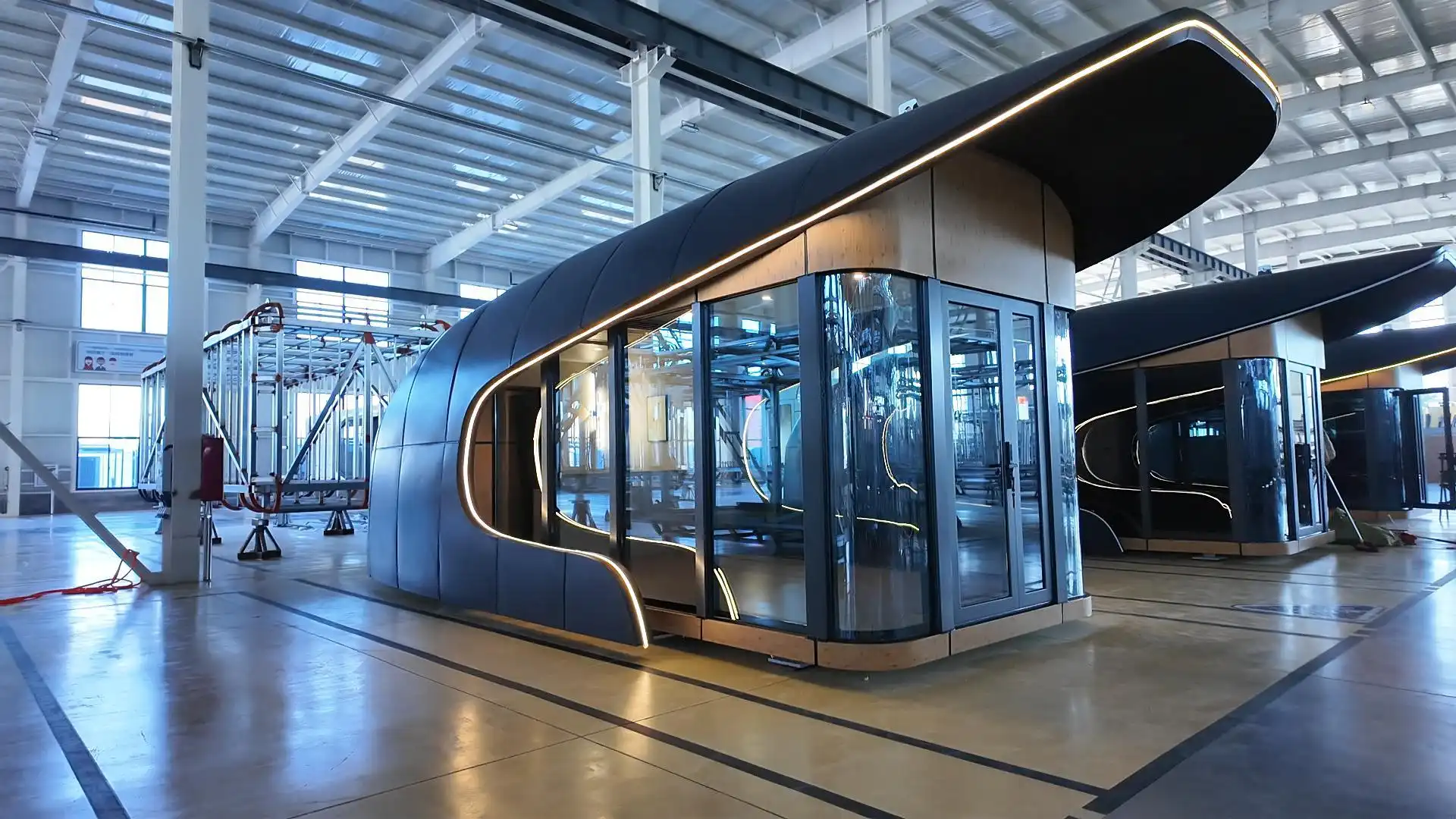
As the world gets more busy, people started coming up with new ways to live. This is where capsule houses came from. These small, modular buildings are usually 100 to 300 square feet and use cutting-edge techniques to make the best use of room. In contrast to regular homes, capsule houses focus on being efficient over having too much. They do this by using furniture that can be used for more than one thing, high storage solutions, and smart technology that is built in.
However, current capsule houses are very different from the ones that were first made in Japan in the 1970s. The ones made today are made of better materials, have better insulation, and have more modern climate control systems. These prefabricated units come either as whole buildings or as separate modules, which makes them easy to set up quickly and change to fit the needs of the site.
Utilizing eco-friendly materials and energy-saving systems, modern capsule houses follow the ideals of sustainable architecture. The building process usually takes place in controlled factories, which ensures uniform quality while cutting down on waste and building time. Developers and contractors who like set schedules and regular building methods will like this method.
Since capsule houses are designed to be flexible, they can be used in a wide range of situations. These buildings are very flexible because they can be used as temporary housing, permanent homes, or commercial areas. Because they are small, they can be used for urban infill projects, in rural areas, and in places where access to infrastructure is limited.
Addressing Modern Housing Challenges Through Innovation
There aren't enough homes for people to live in many big cities, and traditional building ways aren't able to keep up with the demand. Capsule homes solve this problem by making the best use of land and cutting down on building times. These buildings can be put up in places that weren't thought to be buildable before, like on small city lots or temporary sites.
Millions of people around the world are affected by the housing affordability problem, especially in big cities where home prices keep going up and up. A practical answer is a capsule house, which cuts down on construction costs by a large amount while keeping quality and comfort. The simplified building process gets rid of many of the problems that come with traditional building, which saves producers and end users a lot of money.
A lot of people are interested in finding other ways to live because they care about the environment. Capsule homes help with sustainability issues by using fewer materials, being energy-efficient, and having little effect on the world. The controlled manufacturing process makes less waste than traditional building on-site, and the small size means that less energy is used for heating and cooling over time.
Traditional building methods are facing more problems because of a lack of workers in the construction business. These problems can be lessened with capsule homes because they are made in factories and require less skilled on-site labor. This method makes scheduling and quality control more reliable, which is especially helpful for big building projects.
Core Features and Functionality Deep Dive
The main idea behind capsule house design is to make the best use of space. With furniture that can change its purpose throughout the day, every square inch is used for more than one thing. Murphy beds fold up into walls, dining tables can be turned into work surfaces, and storage options are built right into the structure. This method makes it easier to live in while keeping the small footprint that is important to the capsule idea.
Modern building elements are very important to how well a capsule house works. High-strength galvanized steel plates keep the structure strong and don't rust or deteriorate over time. Insulated sandwich panels keep the inside of a building at a livable temperature with little extra energy use compared to traditional building methods. Tempered glass elements let in natural light and make the building safe and long-lasting.
Modern capsule houses are different from their forebears thanks to smart technology integration. Automated temperature control systems use the least amount of energy possible based on how many people are in the building and the weather. To work with our bodies' natural circadian rhythms, LED lighting devices change the color temperature throughout the day. Digital door locks and security systems let you monitor and control who can enter your home from afar.
Modular building methods make it easy to put together and rearrange parts quickly. Standardized connection methods make it possible for units to be put together or split up as needed. The ability to change these features is very helpful for short-term housing projects, seasonal living, or changing business uses. The modular method also makes it easier to maintain and improve the structure over its lifetime.
Technology and Construction Methodology Explained
The capsule houses are made in controlled factories that make sure the standard is always the same and the production goes quickly. Computer-aided design systems make sure that every part works as well as possible while wasting as little material as possible. Tight tolerances are made possible by precise cutting and assembly methods that boost energy economy and structural performance.
Because of size and weight limits, transportation methods need to be carefully thought out. Most capsule houses are shipped as whole units or in big modular sections, which makes putting them together on-site easier. Transport is done by specialized trailers and equipment, and standard sizes make sure that they can fit on most supply routes and sites.
The type of foundation needed depends on what the building will be used for and the weather in the area. Permanent installations usually need standard foundation systems, but temporary installations can use concrete pads or footings that can be adjusted. The lightweight construction means that foundations are not needed as much as they are for regular buildings. This could make site planning easier and save money.
Throughout the manufacturing process, quality control methods make sure that the product always works well and lasts a long time. Materials are put through a lot of tests to make sure they are strong, won't catch fire, and are safe for the earth. Standardized methods are used for assembly to make sure that all units meet safety and structural standards.
 Key Advantages and Market Benefits
Construction speed represents one of the most compelling advantages of capsule houses. While traditional construction projects may require months or years to complete, capsule houses can be manufactured and installed within weeks. This rapid deployment capability proves particularly valuable for emergency housing situations, temporary accommodations, or projects with tight deadlines.
Cost effectiveness attracts developers and buyers seeking affordable housing solutions. The streamlined manufacturing process reduces labor costs while standardized designs eliminate expensive custom engineering. Material efficiency and reduced waste further contribute to cost savings. Operating expenses remain low due to energy-efficient systems and minimal maintenance requirements.
Environmental benefits align with increasing sustainability requirements in construction and development. The compact size reduces material consumption while factory production minimizes construction waste. Energy-efficient design features reduce ongoing environmental impact. Many capsule houses achieve net-zero or near net-zero energy performance through solar integration and advanced insulation systems.
Flexibility and adaptability enable capsule houses to serve diverse markets and applications. Units can function as single-family homes, multi-unit developments, commercial spaces, or institutional facilities. The ability to relocate or reconfigure structures provides unique advantages for changing needs or temporary applications.
Potential Limitations and Important Considerations
Space constraints create challenges for some users and applications. While efficient design maximizes functionality, the compact size may feel restrictive for families or individuals accustomed to larger living spaces. Storage limitations require careful consideration of possessions and lifestyle adjustments. Privacy concerns arise in open-concept designs, particularly for multi-occupant situations.
Building codes and zoning regulations present potential obstacles in some jurisdictions. Many municipalities lack specific provisions for capsule houses or tiny homes, creating approval challenges for developers and buyers. Minimum square footage requirements may prohibit capsule houses in certain areas. Insurance and financing options may be limited for non-traditional housing types.
Resale value uncertainty affects long-term investment potential. The relatively new market for capsule houses creates limited comparable sales data for appraisal purposes. Some buyers may prefer traditional housing options, potentially limiting the pool of future purchasers. Market acceptance varies significantly by region and demographic.
Customization limitations result from standardized manufacturing processes and compact designs. Structural modifications may be difficult or impossible without compromising integrity. Interior layout options remain constrained by the fundamental space limitations. Expansion possibilities are typically limited compared to traditional construction methods.
Target Audience and Ideal Applications
For affordable housing developments and urban infill projects, real estate developers and contractors find capsule houses particularly attractive. The short time it takes to build and the known prices make the project possible even in tough markets. Emergency housing, transitional housing, and social housing schemes are all used by government agencies and non-profits in capsule houses.
More and more, hospitality businesses are using capsule houses to give guests a unique experience and give them more housing choices. They are used by resort builders to make eco-friendly housing that has little effect on the environment. Camping grounds and leisure areas use capsule houses to provide comfortable lodging without having to make big investments in infrastructure.
Temporary offices, retail spaces, and service buildings are all commercial uses. During big projects, construction companies put workers in capsule houses that they set up on-site. These are used by schools as portable classrooms or student housing. They are used by healthcare organizations as temporary medical facilities or isolation rooms.
People who like minimalism and living sustainably find that capsule houses fit with their ideals and way of life. Young workers who live in expensive cities like how affordable it is and how little upkeep it needs. People who work from home like being able to move their whole living place when job opportunities come up.
Conclusion
The planning and building of capsule homes are a big step forward in the way homes are made. Because they can deal with problems like urban density, affordability, and environmental needs, they are important answers for future development needs. Advanced materials, smart design principles, and efficient production processes all work together to make it possible for a wide range of market groups to adopt it.
As technology keeps getting better and more people buy them, the future of capsule houses looks bright. New developments in materials science, energy systems, and making the best use of room will make them even more useful and appealing. The regulatory environment will become more favorable for capsule house development as building codes change to suit different kinds of housing.
Frequently Asked Questions
How long do capsule houses typically last?
Quality capsule houses built with galvanized steel frames and proper materials have a service life exceeding 10 years, with many lasting 20-30 years with appropriate maintenance. The durability depends largely on the construction materials, environmental conditions, and maintenance practices implemented throughout the structure's lifespan.
Can capsule houses withstand severe weather conditions?
Modern capsule houses are engineered to meet specific performance standards, typically including level 7 earthquake resistance and level 7 wind resistance. The structural design and materials selection ensure adequate protection against most weather conditions, though specific performance varies by manufacturer and local climate requirements.
What utilities and infrastructure do capsule houses require?
Capsule houses typically require standard utility connections including electricity, water, and sewer systems. Many units can operate with alternative systems such as solar power, water tanks, and septic systems for off-grid applications. HVAC systems are usually integrated into the structure during manufacturing to ensure optimal performance and efficiency.
Partner with Weifang Sandong Building Materials for Superior Capsule House Solutions
If you need high-quality outdoor cladding and building materials for your capsule house project, Weifang Sandong Building Materials Co.,Ltd. is ready to help. Our many years of experience working with clients in over 30 countries gives us the skills needed to make compact housing projects a success. As a reliable supplier of capsule houses, we are aware of the special materials needed for modular building and layouts that make the most of room.
A lot of the things we sell are exterior wall claddings, insulated sandwich wall panels, and light gauge steel framing systems that are great for building capsule houses. These materials are strong enough to meet the performance standards needed for small living buildings and look good enough for a wide range of uses. Our quality control procedures make sure that all of our goods work the same way, which meets the needs of modular housing projects for dependability.
Our team can provide technical support that goes beyond just supplying materials. They can also help with planning, installation, and ongoing project support. We know that capsule house projects often need specific material requirements and the organization of a lot of different systems. Our experience working with architects, contractors, and developers makes sure that the whole project goes smoothly, from the first idea to the final placement.
Ready to explore superior materials for your next capsule housing project? Contact our experienced team to discuss your specific requirements and discover how our premium building materials can enhance your development success. Reach out to us today and contact us at info@sdqsc.com to begin your consultation with our material specialists.