- English
- French
- German
- Portuguese
- Spanish
- Russian
- Japanese
- Korean
- Arabic
- Greek
- German
- Turkish
- Italian
- Danish
- Romanian
- Indonesian
- Czech
- Afrikaans
- Swedish
- Polish
- Basque
- Catalan
- Esperanto
- Hindi
- Lao
- Albanian
- Amharic
- Armenian
- Azerbaijani
- Belarusian
- Bengali
- Bosnian
- Bulgarian
- Cebuano
- Chichewa
- Corsican
- Croatian
- Dutch
- Estonian
- Filipino
- Finnish
- Frisian
- Galician
- Georgian
- Gujarati
- Haitian
- Hausa
- Hawaiian
- Hebrew
- Hmong
- Hungarian
- Icelandic
- Igbo
- Javanese
- Kannada
- Kazakh
- Khmer
- Kurdish
- Kyrgyz
- Latin
- Latvian
- Lithuanian
- Luxembou..
- Macedonian
- Malagasy
- Malay
- Malayalam
- Maltese
- Maori
- Marathi
- Mongolian
- Burmese
- Nepali
- Norwegian
- Pashto
- Persian
- Punjabi
- Serbian
- Sesotho
- Sinhala
- Slovak
- Slovenian
- Somali
- Samoan
- Scots Gaelic
- Shona
- Sindhi
- Sundanese
- Swahili
- Tajik
- Tamil
- Telugu
- Thai
- Ukrainian
- Urdu
- Uzbek
- Vietnamese
- Welsh
- Xhosa
- Yiddish
- Yoruba
- Zulu
Phenolic Film Plywood for Concrete
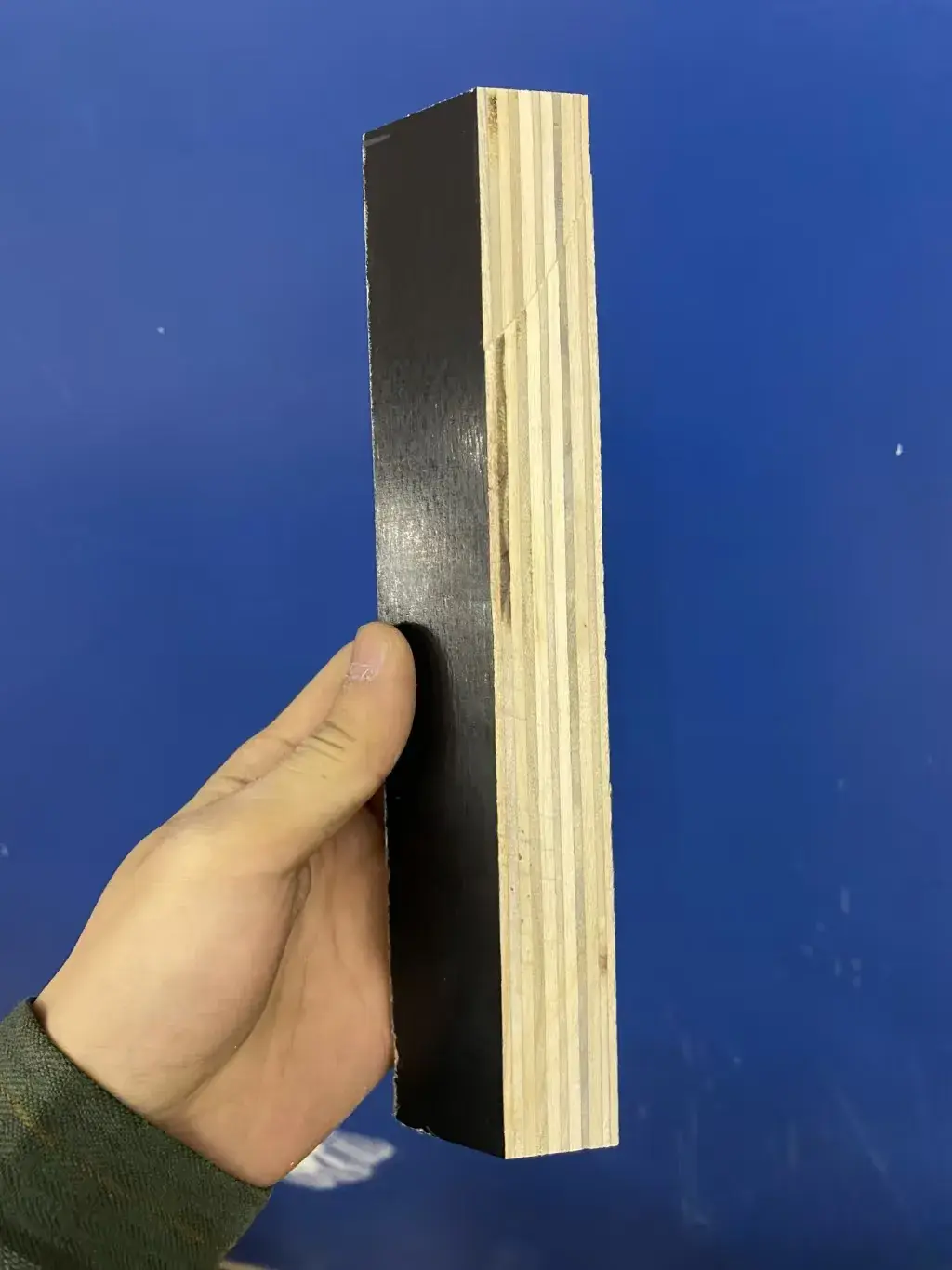
Sandong Building Materials is a China-based building materials manufacturer and supplier serving construction customers in more than 30 countries and regions. Phenolic film plywood is an engineered plywood product developed specifically for concrete formwork. Instead of leaving the wood surface exposed, a protective film is applied to the board surface, creating a smoother and more water-resistant working face.
The phenolic resin layer is particularly important in construction environments because concrete pouring involves water, cement slurry, pressure and repeated demolding. A suitable film surface helps reduce water penetration, limits direct contact between concrete and the wood core, and makes the board easier to clean and reuse.
Key Advantages for Construction Projects
Better Resistance to Wet Construction Conditions
Concrete formwork is continuously exposed to water and cement slurry. Phenolic resin provides a protective surface that helps the plywood perform in this environment. Our phenolic resin weather-resistant formwork plywood is designed for applications involving water exposure, outdoor rain and demanding construction conditions.
Easier Concrete Release
A smooth film surface reduces direct adhesion between the concrete and plywood. This makes demolding easier and can help reduce damage to the concrete surface and the formwork itself.
More Consistent Concrete Surface
For projects where the appearance of exposed concrete matters, the quality and condition of the formwork surface directly affect the finished concrete. Film-coated plywood provides a relatively smooth forming face and is therefore suitable for projects requiring better surface flatness.
Good Resistance to Wear and Deformation
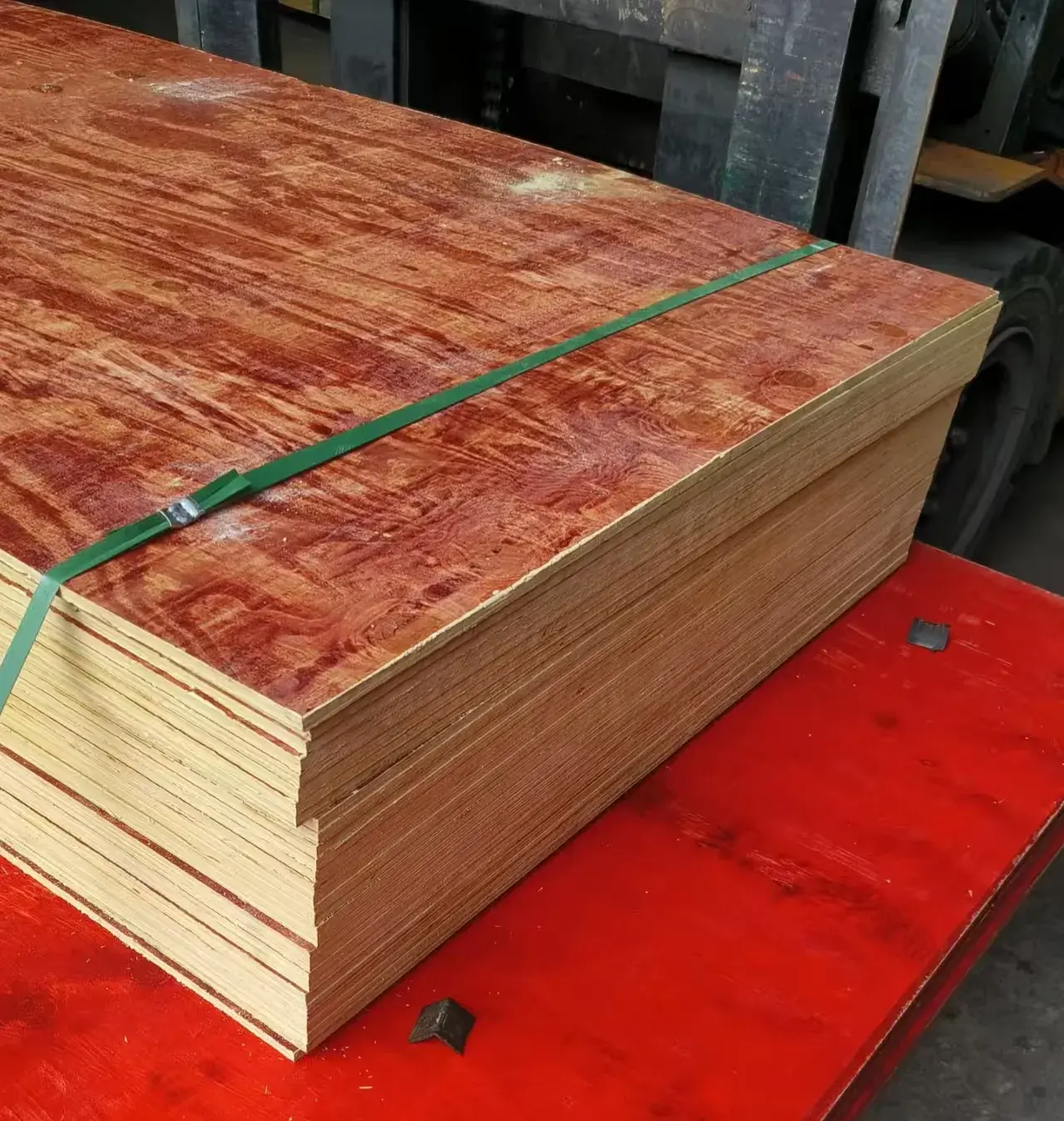
Construction plywood needs to withstand handling, fixing, concrete pressure and repeated removal. The board structure and number of veneer layers affect its compression and deformation performance. Higher-layer configurations are available for more demanding applications.
Potentially Lower Cost per Use
The purchase price of one sheet does not tell the whole story. For contractors, a more useful calculation is the cost per effective use. If the board can maintain its forming quality through multiple pours, the initial material cost can be evaluated against its actual service performance.
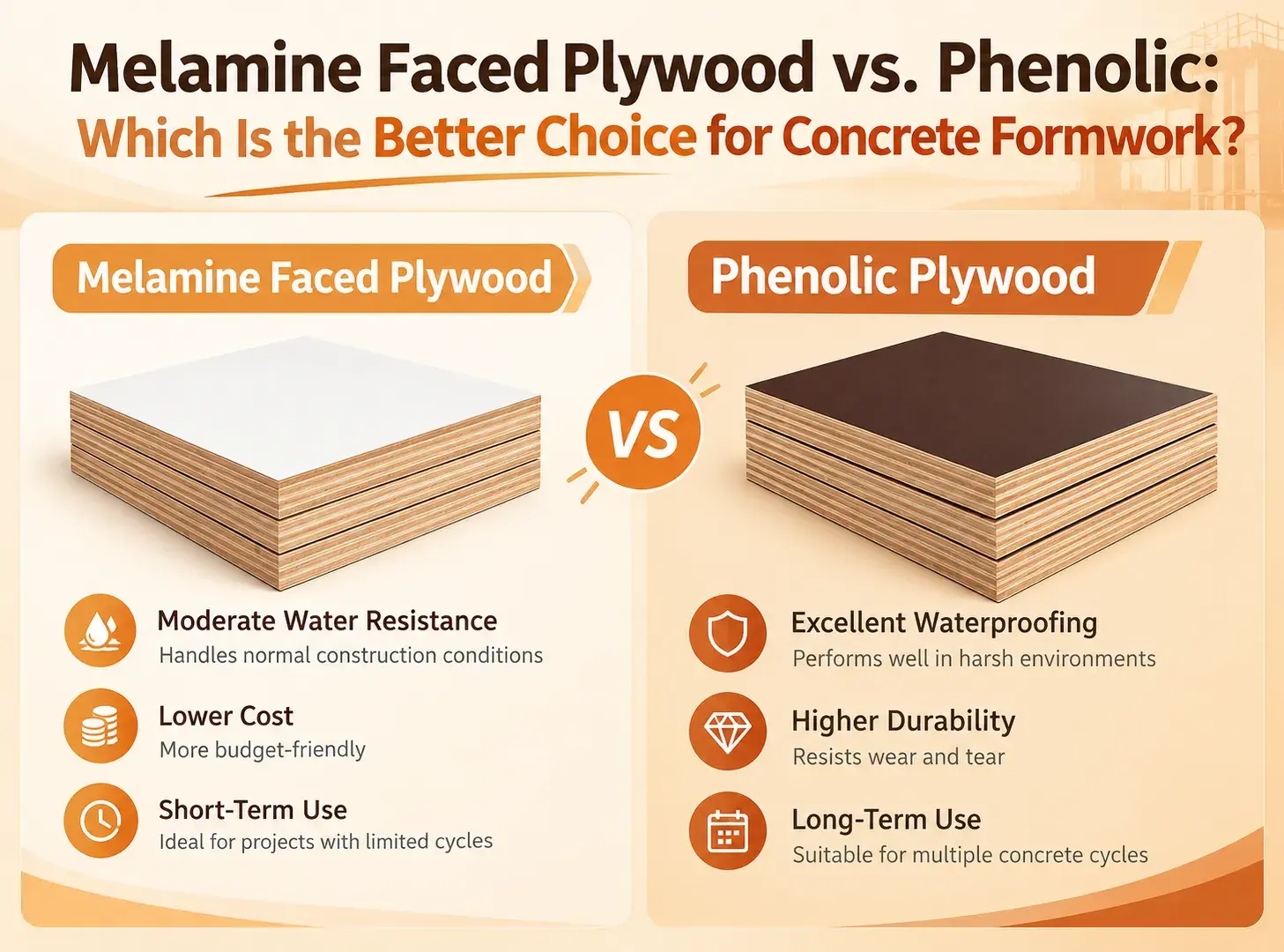
Melamine Faced Plywood VS Phenolic Plywood
· Melamine Faced Plywood
Moderate Water Resistance It can withstand moisture under normal construction site conditions, perfect for indoor and mild outdoor projects.
Lower Cost Budget-friendly raw material, greatly cuts down your one-time project input.
Short-Term Use Best choice for projects with limited pouring cycles, ideal for small & medium-scale short-cycle construction.
· Phenolic Plywood
Excellent Waterproofing Superior waterproof property, stable performance even in wet, harsh construction environments.
Higher Durability Strong wear & tear resistance, the phenolic film surface prevents damage during concrete stripping.
Long-Term Use Supports multiple concrete pouring cycles, reduces the cost per use for large and repeated construction projects.
Board Structure and Layer Selection
The number of veneer layers is one of the practical specifications buyers should consider before ordering formwork plywood.
Our formwork plywood range uses cross-laminated veneer construction, with the number of layers influencing board thickness, compression performance and deformation resistance. San Dong Building Materials provides mainstream configurations including 7-layer, 9-layer and 11-layer or higher structures.
|
Board Structure |
Typical Project Consideration |
|
7-layer |
Conventional building formwork and lighter-duty concrete work |
|
9-layer |
Higher compression and deformation resistance for demanding formwork |
|
11-layer or higher |
Heavy-duty infrastructure and projects requiring greater structural support |
FAQ
Q1: What is phenolic film plywood used for?
A1: It is mainly used as concrete formwork. The phenolic film provides a smoother, more water-resistant surface that helps with concrete release and repeated formwork use.
Q2: What makes phenolic plywood different from ordinary plywood?
A2: Phenolic plywood has a protective resin film designed for wet construction environments. It generally provides better resistance to moisture, concrete adhesion and surface wear than untreated plywood.
Q3: Can phenolic film plywood be used outdoors?
A3: Yes. San Dong Building Materials describes its phenolic resin weather-resistant formwork plywood as suitable for outdoor rain and sunlight exposure and demanding applications such as bridges and infrastructure.
Q4: How many layers should concrete formwork plywood have?
A4: It depends on the project. San Dong Building Materials provides 7-layer, 9-layer and 11-layer or higher structures. Higher-layer boards are generally considered for more demanding load-bearing and infrastructure applications.
Q5: Which core is better, poplar, birch or pine?
A5: Poplar is lighter and cost-effective, while birch and pine generally provide higher density and stronger compression and deformation resistance. The best choice depends on the formwork design and expected working conditions.